

What's Causing Brown Spots on My Lawn?
Need Same Day Service? We Can Help.
Call Us Now at 847-304-4144.
Quick Answer
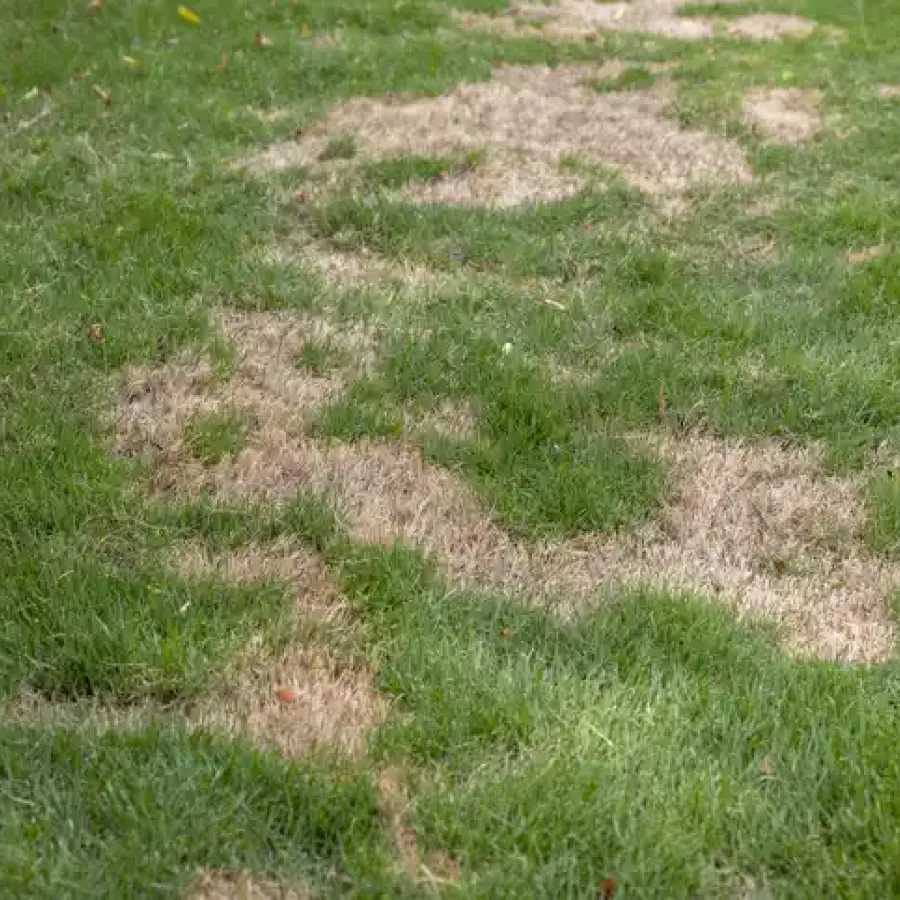
Brown spots on a lawn usually come from one of three sources: fungal disease (dollar spot, brown patch, necrotic ring spot), insect damage (mainly grubs), or everyday causes like dog urine, dull mower blades, drought stress, or thatch buildup. The shape, timing, and pattern of the spots are usually the fastest way to tell them apart.
Is It Disease, Pests, or Something Else?
Before treating anything, it helps to rule out the obvious first. A few quick checks:
- Small, round spots, silver-dollar-sized: likely dollar spot
- Larger, irregular patches with a darker ring around the edge: likely brown patch
- Grass that pulls up easily like loose carpet: likely grubs
- Circular spots with a green center and brown ring, usually near where a dog spends time: likely urine burn
- Streaky or scattered patches that follow a mowing pattern: likely a mower blade or scalping issue
None of these are guesses you need to make alone. The patterns below will get most homeowners close, and a lawn care professional can confirm it on-site if you're still not sure.
Lawn Diseases That Cause Brown Spots
Cool-season lawns in Northern Illinois, mostly Kentucky bluegrass and fescue, are prone to a handful of fungal diseases that show up as brown spots during specific weather windows.
Dollar Spot
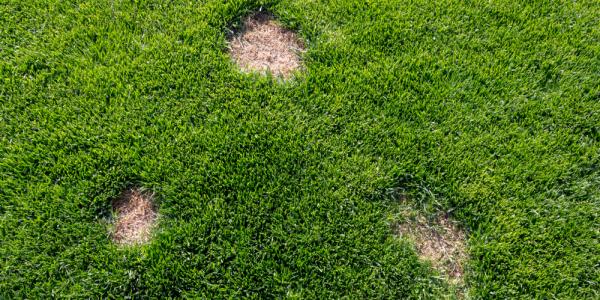
Small, straw-colored circular spots, roughly the size of a silver dollar, that can merge into larger patches as the disease spreads. Dollar spot tends to show up when nights are warm, and grass stays wet for extended periods, and it's often worse on lawns that are under-fertilized.
Brown Patch
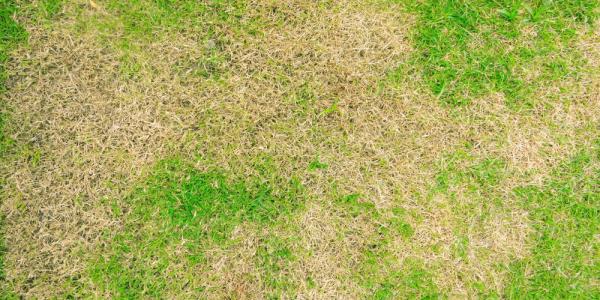
Larger, irregular circular patches, often with a darker "smoke ring" border visible in early morning dew. Brown patch is most active during hot, humid weather, and it typically develops on lawns already under stress from excess thatch or poor soil conditions. Unlike grub damage, brown patch does not sever the roots, so affected turf should not pull up easily.
Necrotic Ring Spot and Summer Patch
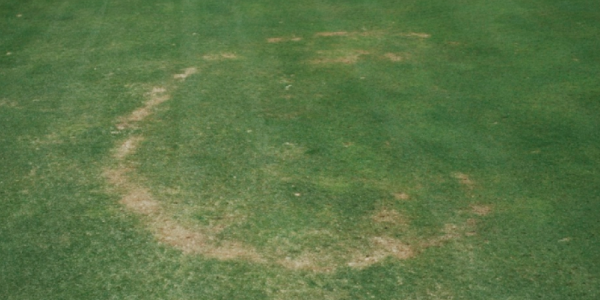
These root-level diseases can be trickier to diagnose because the early symptoms resemble simple nutrient deficiency. Over time, affected areas develop a "frogeye" look, a ring of dead grass surrounding a patch of green in the center. Summer patch tends to peak in hot weather, while necrotic ring spot is more active in late spring and fall.
Grubs and Other Pests
Grubs are the most common insect cause of brown spots on lawns in this region. They feed on grass roots from late summer through fall, and the damage looks distinct from disease: affected turf pulls up easily, almost like a loose carpet, because the roots have been eaten away. Increased digging from skunks, raccoons, or birds hunting for grubs is often the first sign homeowners notice.
If you're dealing with visible adult beetles on your trees and shrubs as well as lawn damage, that's likely connected. For a deeper look at how grub damage develops and when to treat it, see our guide on stopping Japanese beetles.
Other Common Causes
Not every brown spot is a disease or a pest. Some of the most common causes are due to everyday wear and tear:
- Dog urine. The high nitrogen content burns the grass, leaving a dead center often ringed by a darker green halo where the diluted nitrogen acted like fertilizer.
- Dull mower blades. Instead of cutting cleanly, dull blades shred the grass tip, and the damaged, ragged edges turn brown and can invite fungal infection.
- Drought stress. Cool-season grasses naturally go dormant and brown during hot, dry stretches as a way of surviving the heat. The lawn typically greens back up once temperatures drop and moisture returns.
- Thatch buildup. A thick layer of dead grass and roots between the soil and the green blades blocks water and nutrients from reaching the roots, leading to thin, brown patches.
- Compacted soil. Heavy foot traffic or clay-heavy soil can prevent roots from getting air, water, and nutrients, leaving grass weak and discolored.
- Chemical spills. Gasoline from lawn equipment or a fertilizer spill can kill grass almost immediately, leaving a distinct, sharply bordered dead patch.
How to Narrow Down the Cause
- Check the shape. Perfectly round spots suggest urine burn or dollar spot. Irregular patches with a darker border point toward brown patch. Streaky patterns that follow mowing lines suggest a blade or scalping issue.
- Do the tug test. Grab a handful of grass in the affected area and pull gently. If it lifts easily with no resistance, suspect grubs. If it holds firm, the cause is more likely disease or an environmental issue.
- Check the soil. Push a screwdriver into the ground near the brown spot. If it goes in easily, compaction likely isn't the cause. If you meet real resistance, compacted soil or thatch buildup is a strong candidate.
- Consider the timing. Dollar spot and brown patch flare up in hot, humid weather. Necrotic ring spot is more common in cool, wet spring and fall conditions. Grub damage typically shows up in late summer.
- Look at the location. A single, isolated spot near where your dog spends time points to urine burn far more often than disease.
Prevention Tips
- Water deeply and infrequently, early in the morning, rather than lightly and often. Watering at night keeps grass blades wet overnight, which creates ideal conditions for fungal disease to spread.
- Sharpen mower blades each spring and fall, and avoid cutting more than a third of the grass blade at once.
- Aerate compacted lawns and dethatch if the thatch layer exceeds about half an inch.
- Avoid over-fertilizing in late spring and summer, since excess nitrogen creates ideal conditions for brown patch.
- Rinse dog urine spots with water shortly after they happen to dilute the nitrogen before it burns the grass.
When to Call a Professional
Bring in a lawn care professional if:
- The brown spots keep spreading despite watering and mowing adjustments
- You're not confident telling disease, grub damage, and cultural causes apart
- The same area has come back year after year, which often points to an underlying soil or drainage issue a one-time fix won't solve
Turf Care Enterprises' green team evaluates your lawn in person, since accurately identifying the cause is the difference between fixing the actual problem and treating the wrong one. Contact our team today if you're noticing any of the signs above, and our team will help figure out the best path forward for your lawn.