

Core vs. Liquid Aeration
Need Same Day Service? We Can Help.
Call Us Now at 847-304-4144.
If your lawn looks thin, patchy, or tired no matter how much you water or fertilize it, the problem often isn't above the soil — it's underneath it. Compacted soil blocks air, water, and nutrients from reaching the root zone, and no amount of surface-level care fixes that. Aeration does.
There are two ways to get it done: core aeration, the traditional mechanical method, and liquid aeration, a newer approach that skips the equipment altogether. Here's how each one works and how to tell which your lawn needs.
Signs Your Lawn Needs Aeration
A few tell-tale signs point to compacted soil:
- Water pools on the surface instead of soaking in after rain or watering
- The lawn feels hard or spongy underfoot, especially in high-traffic areas like near a patio, gate, or play area
- Grass thins out or browns in patches despite a regular fertilization schedule
- Thatch — the layer of dead grass and roots between the soil and the green blades — feels thicker than about half an inch
Any of these are a sign your lawn's roots aren't getting what they need. From there, the method you choose depends on how severe the compaction is and what you're trying to accomplish.
Core Aeration
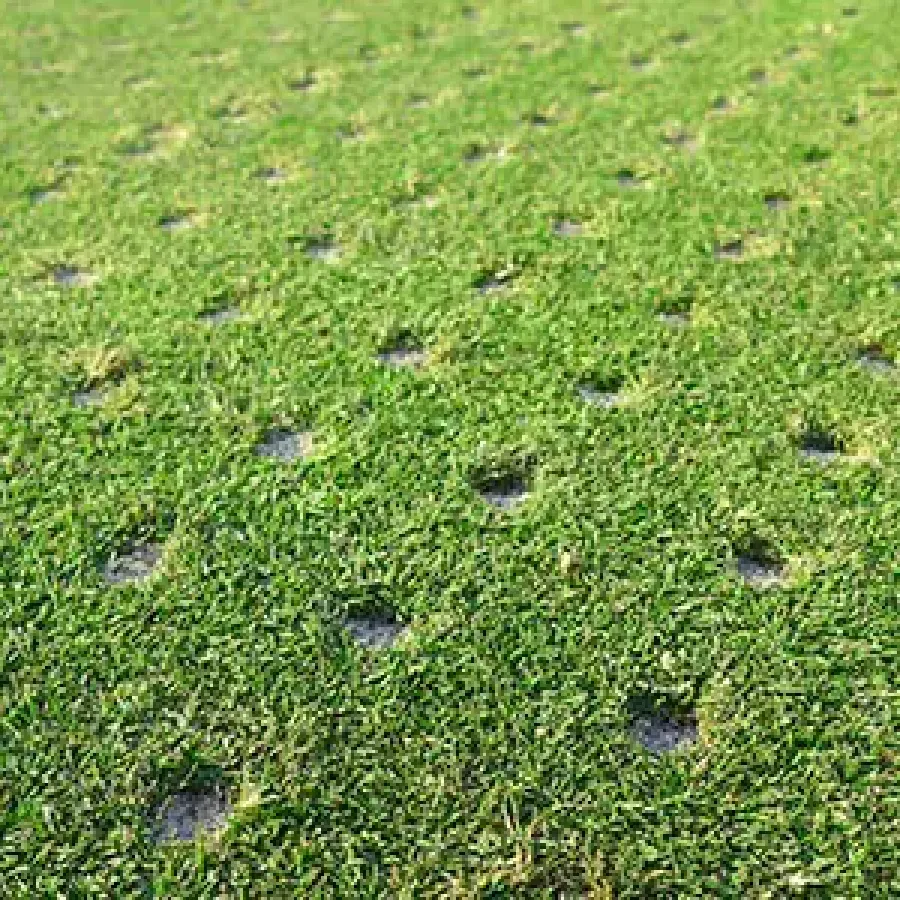
Core aeration is the traditional, mechanical method of relieving soil compaction. A gas-powered aerator is driven across the lawn, using hollow tines to physically pull small plugs of soil and thatch out of the ground. This leaves behind thousands of small holes, giving roots direct access to air, water, and nutrients.
How Is Core Aeration Performed?
- A technician walks the lawn with a core aerator, which uses hollow, tubular tines to pull small plugs of soil and thatch from the ground
- The plugs are deposited on top of the lawn as the machine passes over it
- Over the next 2–4 weeks, the plugs break down naturally and work back into the lawn — this happens faster with regular rainfall
- The holes left behind allow air, water, and nutrients to reach the root zone directly, and create ideal conditions for overseeding
Best suited for:
- Heavy soil compaction
- Thick thatch buildup
- Clay-heavy soil
- High foot traffic areas
- Lawns being overseeded, since the holes give grass seed the direct soil contact it needs to germinate
The one tradeoff: for a couple of weeks, your lawn will have small dirt plugs scattered across it while they break down. It's a short-term look for a longer-term result.
When's the Best Time for Core Aeration?
The best time to core aerate is fall, when cool-season grasses common to Northern Illinois lawns — like bluegrass and fescue — are actively rebuilding their root systems after the stress of summer heat. Fall is also the ideal window for overseeding, since the timing lines up with both root development and the seed-to-soil contact aeration creates.
Spring aeration is a solid second treatment for lawns aerating twice a year, which is what we typically recommend for lawns dealing with heavy compaction or clay soil. If you can only fit in one aeration a year, fall is the stronger choice.
Liquid Aeration
What Is Liquid Aeration?
Liquid aeration is Turf Care's alternative to mechanical aeration, delivered through our Liquid Aeration SBR (Soil Biology Restoration) service. Instead of physically removing plugs of soil, it's a liquid solution, custom-formulated with an organic chemist, that's sprayed evenly across the entire lawn. There are no plugs, no soil left on the surface, and no cleanup required.
It's designed for homeowners who want the benefits of regular aeration without the visible disruption core aeration leaves behind, or who prefer a treatment that fits into an ongoing lawn care program rather than a standalone visit.
How Does Liquid Aeration Work?
- A technician assesses your lawn's soil and compaction level
- The SBR solution is applied across the entire lawn using standard spray equipment
- The solution works its way into the top layer of soil, where it's designed to support beneficial soil microorganisms and loosen compaction over time
- The treatment is repeated on an ongoing basis, building cumulative benefits with each application
Because it's a liquid application, coverage is even across the whole yard — there's no need to mark irrigation heads or invisible fence lines the way you would before running core aeration equipment, and no risk of damaging buried lines.
Is Liquid Aeration Effective?
Liquid Aeration SBR works differently than core aeration by design: instead of an immediate physical opening in the soil, it's built around ongoing support for your lawn's soil biology, with results that build the more consistently it's applied. That makes it a strong fit as part of a season-long or year-round program rather than a single fix, and a good option for homeowners who want to stay ahead of compaction without the two-week recovery period that comes with pulled plugs.
It's also safe for kids and pets once the application has dried, and safe to use around irrigation systems and invisible fencing without any marking beforehand.
Frequently Asked Questions
Can I do both core and liquid aeration? Yes. Many lawns benefit from a fall core aeration paired with liquid aeration treatments throughout the rest of the season to maintain the results between mechanical visits.
Will aeration hurt my lawn? No. A properly timed aeration, core or liquid, supports root health. Core aeration looks messy for a couple of weeks while plugs break down, but that's cosmetic, not damage.
How do I know which one is right for my lawn? It depends on how compacted your soil is, whether you're overseeding this season, and whether you want a one-time treatment or an ongoing part of your lawn care program. Our team evaluates your lawn's specific conditions before recommending a plan.
Get a free estimate, and we'll take a look at your lawn before recommending which service fits.