

Common Signs of Tree Damage
Need Same Day Service? We Can Help.
Call Us Now at 847-304-4144.
Quick Answer
Tree damage typically shows up as discolored or thinning leaves, dead or missing bark, cracks or oozing on the trunk, and dead branches that haven't fallen. Many of these symptoms above ground actually point to a problem below ground, in the roots, so a tree that looks stressed at the top often needs attention at the base.
Signs in the Leaves and Canopy
Leaves are usually the first place tree stress becomes visible, since they're the most sensitive part of the tree to react to a problem elsewhere.
- Discoloration out of season. Leaves turning pale green, yellow, or showing early fall color in the middle of summer are a sign the tree isn't getting what it needs, whether that's water, nutrients, or something happening in the root zone.
- Premature leaf drop. Leaves falling well before autumn, especially on a tree that still has green foliage elsewhere, often points to drought stress or a root problem.
- Leaf scorch. Browning or crisping along the edges of leaves is a common sign of drought stress, particularly during hot, dry stretches.
- A thinning canopy. A noticeably sparser crown compared to previous years, with more visible sky through the branches, is one of the clearest signs a tree is in decline.
Signs on the Bark and Trunk
The trunk tells a different part of the story, and some of these signs point to more serious, structural problems.
- Cracks or splits. Vertical splits in the bark, sometimes called frost cracks, are common on the south or west side of a trunk where rapid temperature swings cause the bark to expand and contract unevenly. These usually heal on their own but leave the area more vulnerable to disease.
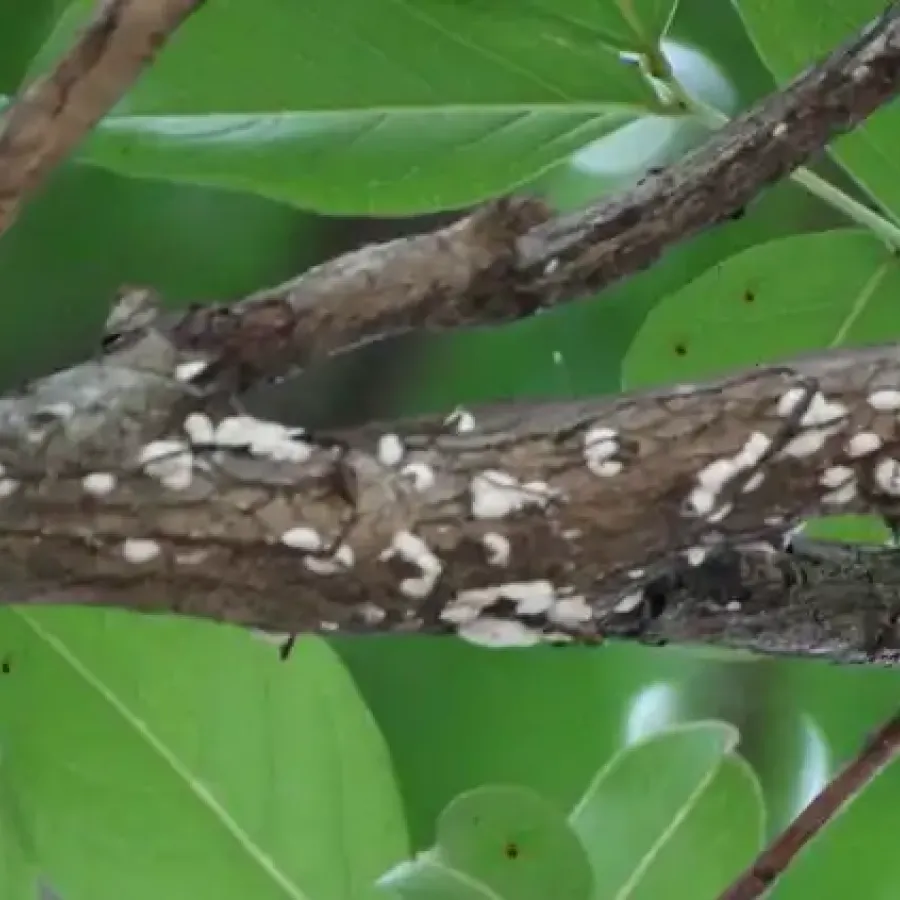
- Oozing or sap. Sap seeping from the trunk, especially combined with darkened or sunken bark nearby, can be a sign of a canker disease or insect activity underneath.
- Cankers. Sunken or discolored patches on the bark, sometimes with cracked or split edges, are a sign of a fungal or bacterial infection that's killing tissue in that area.
- Fungal growth at the base. Mushrooms or shelf-like fungal growths at the base of a tree or trunk usually indicate internal decay, often in the roots or lower trunk.
Signs in the Branches
- Deadwood. Dead branches that haven't dropped on their own are one of the most common visible signs of decline, and they're worth removing before they fall on their own.
- Dieback. Branch tips or entire limbs dying back from the tip inward, especially on multiple branches at once, points to a stress the tree is actively struggling with.
- Storm or mechanical damage. Broken limbs, torn bark, or exposed wood from wind, ice, or equipment damage create entry points for disease and insects if left untreated.
What's Usually Behind It
Most tree damage traces back to one of a few root causes: drought stress, soil compaction, root damage from construction or grade changes, or insect and disease pressure. These often overlap. A tree weakened by drought or compacted soil becomes more vulnerable to the diseases and borers that a healthy tree would otherwise resist on its own. That's part of why the Chicago suburbs' clay-heavy soil and temperature swings put local trees under more baseline stress than trees in more forgiving climates.
When to Call a Professional
Bring in a certified arborist if:
- You're noticing more than one of these signs on the same tree at the same time
- A mature tree shows sudden canopy decline, early fall color, or limb loss that wasn't there the year before
- There's fungal growth at the base of the trunk, since that often signals internal decay that isn't visible from the outside
- You're not sure whether a symptom is a normal seasonal response or an actual problem
Our team of ISA Certified Arborists diagnoses what's actually happening with a tree before recommending treatment, which matters since so many of these symptoms can share more than one cause. Contact us today for a free assessment of your ornamentals.